
There's a textbook answer to this question. Content marketing is a strategic approach to producing and distributing valuable, consistent content that attracts and retains a defined audience, ultimately driving profitable customer action. That's the definition most marketing courses run with, and it's fine as far as it goes.
After 20 years in production and working inside senior marketing teams as their embedded content person, I'd give a different answer. The version that works in a mid-market or enterprise B2B marketing team looks very little like the version taught on the courses.
The textbook version isn't wrong. It's just abstract.
The standard definition tells you what content marketing is. It doesn't tell you what happens when a marketing team tries to do it. That's where most content marketing goes wrong.
A team can know exactly what content marketing is and still fail to execute it. The reasons aren't usually about talent. Senior content oversight is missing or diluted across too many other responsibilities. The gap between brief and published piece is where most content dies. There's no operational discipline holding the work together week to week.
A better question: what does a marketing team need to do content marketing well?

What content marketing looks like when it works
The teams I work with who get real value from content marketing don't treat it as a series of launches. They treat it as a rhythm.
They publish consistently, at a tempo that survives a busy quarter. They know that one substantive piece a week beats five thin pieces spread across every channel: five thin pieces need five briefs, five sign-offs, five distributions, and five reviews. One good piece needs one of each and then gets reused five ways.
Content maximisation is the discipline that separates teams who compound their content from teams who churn it.
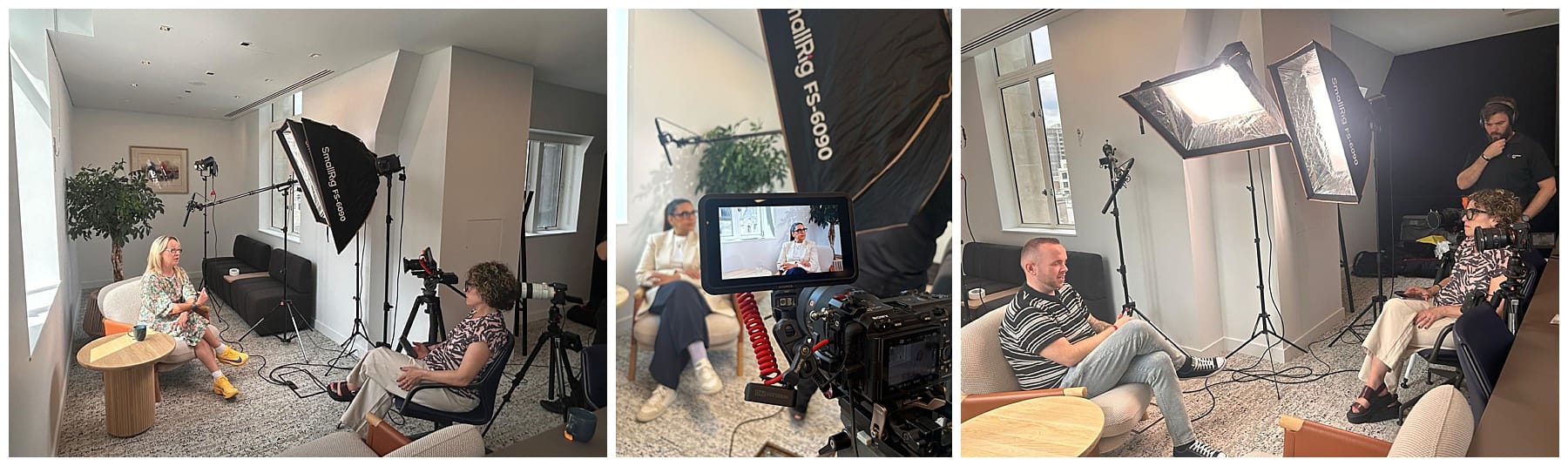
A recent example. F Word at Work (FMAW), a workplace culture consultancy I work with, were running a research project with pharmaceutical company Ferring. The interview day was a full session: multiple senior contributors on camera, exploring the four key themes coming out of the underlying research. I ran the shoot with two cameras, lights, microphones, and directing the flow in the room.
That one day produced a 6-minute hero film for FMAW's own November event (FWordLive); four chapter pieces released on Ferring's YouTube channel as part of their #ProjectFamily series, one per research theme; short stings for both organisations to drive traffic to the chapter series; a set of short story cuts for FMAW's ongoing content; and an archive of usable footage for FMAW to draw on across the year ahead. Both organisations shared the outputs, and audiences got reached at every depth, from a 30-second sting to a 6-minute film.
That's what content maximisation looks like as a workflow decision made at the point of production, rather than a slogan on a slide.
Where content marketing usually goes wrong in senior B2B teams
It's rarely a definition problem. Every marketing team I've worked with in the last decade knew what content marketing was. What they lacked usually came down to three things: senior oversight, operational discipline, and a trust-led rather than output-led mindset.
Senior oversight first. Most mid-market and enterprise B2B teams have a marketing director stretched across strategy, budget, agency management, and stakeholder wrangling. Content sits as one of ten priorities. When decisions get made about what to publish, the person making them is often too senior to be in the detail, and the person in the detail is often too junior to hold the line on quality. Both problems stem from the same cause: no senior content specialist embedded close enough to the work.
Operational discipline is the second gap. A content calendar in Asana isn't the same as a content operation. What actually keeps content flowing is small work: a briefing template that captures the right context first time, a review chain that doesn't invite drift, a publishing checklist that catches broken links before they ship. Unglamorous, and the difference between publishing every week and publishing when someone remembers.
The third is mindset. Most B2B content strategies measure themselves on volume, whether that's posts published or downloads collected or views. The senior buyers those teams are trying to reach don't measure them on those things. They measure them on whether the content sounds like a company that understands their world. The teams who win on content are usually the ones producing less but with more intent behind each piece.
What senior marketing leaders actually need
If you're a marketing director at a mid-market or enterprise B2B organisation, you probably don't need someone to tell you what content marketing is. You need someone senior enough to hold the line on quality but junior enough to be in the detail. You need a publishing rhythm your team can sustain without heroics. You need a framework for deciding what to say, when, and to whom. You need content operations that survive the week your best copywriter is on holiday. You need a view of content as operational discipline that compounds, rather than a campaign that peaks.
That's why the fractional content producer model exists. It fits the gap.

The fractional angle
For the last few years I've worked with organisations who already have excellent marketing teams. They haven't needed someone to fix them; they've needed someone senior to embed alongside them and hold content strategy and production together at the pace their business moves. That covers content operations, sustainable publishing rhythms, strategic storytelling, and the calm expert delivery that stops content becoming another fire to fight.
Fractional works because it gives you senior content thinking without the full-time hire. It works particularly well for two shapes of team. The first is distributed marketing: multiple business units, central marketing running thin, content quality inconsistent across BUs. The second is capacity-stretched central marketing: a strong small team who need cover during a busy quarter without the reputational risk of another agency handshake.
Neither shape needs rescuing. What both need is a senior partner.
Where to go next
If any of this sounds like a conversation worth having, book a discovery call. No pitch. Just a proper conversation about what your content operation actually looks like today and what you'd like it to be.
For more on how content operations compound when the discipline is right, listen to the Alvin Poh episode of The Personal Connection Podcast on scaling businesses. The same principles apply to scaling a content operation.
Related reading:
- The Mind-Blowing Power of Video Content
- What Are Podcasts and How Can They Help Your Business?
- Content Strategy and Fractional Content Support (services page)
An earlier version of this post was published on my previous site in March 2021. This is the 2026 fractional-lens rewrite.
What's the difference between content marketing and content strategy?
Content strategy is the framework (what you say, to whom, why). Content marketing is the doing (producing, publishing, distributing consistently over time). Most teams have some strategy and inconsistent doing.
What does a fractional content producer actually do?
Embeds inside an existing marketing team as their senior content person, without the full-time hire. Covers strategic decisions, operational discipline, and production oversight at a pace the business can sustain.
How is content marketing different for B2B mid-market compared to B2C?
B2B mid-market buyers make considered decisions with multiple stakeholders over months, not impulse buys. Content marketing has to compound trust with a specific audience over time, not chase reach. Volume matters less; consistency and depth matter more.
What is content maximisation?
The discipline of making one substantial piece of content work multiple ways across formats, channels, and audiences. Turns one production investment into a compounding library rather than a single-use asset.